
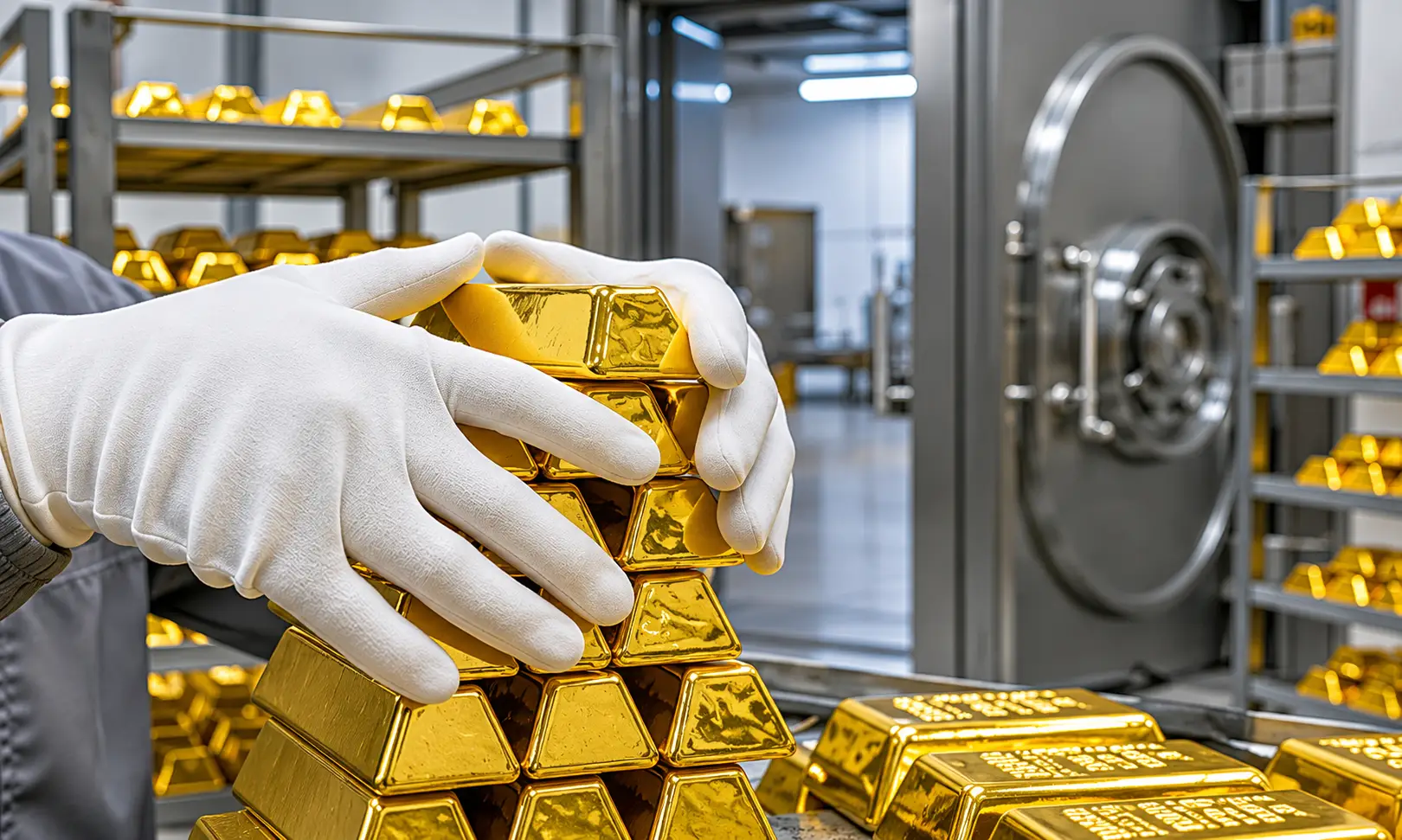
Central banks are amassing gold at the fastest pace in nearly two years, as they take advantage of discounted prices. National banks added a net 321 metric tons of gold to their reserves during the third quarter of 2026, a gain of 42 percent from the year-ago period, according to the World Gold Council.
Through their aggressive purchases, central bankers have provided key support to the gold price, as the precious metal has faced headwinds from rising interest rates. Through June and July, gold repeatedly bounced off the $3,900-an-ounce level, no doubt aided by institutional purchases.
Central banks have played a key role in gold’s multi-year rally that took the metal to record heights early in 2026. For the first nine months of the year, central bank buying was up six percent from the year-ago period.
Notably, the World Gold Council says much of the buying was unreported, which has been a feature of central bank buying since 2022. China, in particular, is believed to have purchased far more of the precious metal than it has publicly acknowledged.
The People’s Bank of China reported adding 63 metric tons during the third quarter, making it the largest buyer. The National Bank of Poland was second, purchasing 40 tons. Both countries have executed aggressive multi-year gold buying programs. On a smaller scale, the Czech Republic has also been gradually accumulating gold in recent years, and it added another five tons during the third quarter. Kazakhstan and Uzbekistan were also significant buyers during the period, each adding 14 tons of gold to their reserves.