
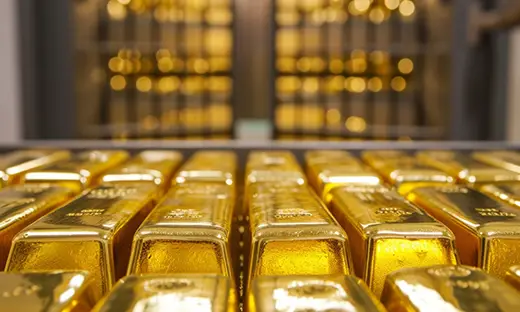
A record number of central banks say they plan to buy gold, a strong vote of support for the precious metal from the world’s most important sovereign fund managers at a time of heightened geopolitical turmoil. The World Gold Council’s (WGC) annual survey of central bankers found 45 percent saying their gold reserves will increase over the next 12 months.
Chief among their reasons for buying and holding gold were: gold’s performance during times of crisis; gold’s role as a long-term store of value; its effectiveness as an effective portfolio diversifier; and the fact that it is an excellent geopolitical risk hedge.
Even those banks that have no immediate plans to increase gold reserves acknowledged the strong interest in gold, with 89 percent expecting overall central bank gold reserves to increase over the next 12 months.
Notably, nearly three-quarters of respondents predict U.S. dollar holdings within global central bank reserves will decline over the next five years, a vote of no confidence in the greenback as a significant number of countries “de-dollarize” their reserve assets.
Another indication of caution is that a growing number of central banks say they are holding more gold within their own borders rather than vaulting it overseas, and plan to continue doing so. Still, the Bank of England vaults in London remain the most widely used location for storing gold reserves.
Central bank gold purchases have been a key factor in gold’s spectacular ascent in recent years. On average, sovereign banks have amassed an annual total of more than 1,000 metric tons of gold over the past four years, more than double the previous decade’s average.
The World Gold Council conducted its Central Banks Gold Reserves Survey between February and May, with most banks responding during the U.S.-Iran War. Seventy-six central banks participated in the survey.
“As the world becomes increasingly volatile and unpredictable, gold’s safety, liquidity, and return characteristics—the three key investment objectives for central banks—have risen in importance,” the WGC concluded. “The trends uncovered in our survey suggest that central banks continue to recognize the benefits of an allocation to gold and indicate that their demand for gold will likely remain healthy into the foreseeable future.”